
Loading...
Serving Mankato, MN and surrounding areas. (507) 308-9721
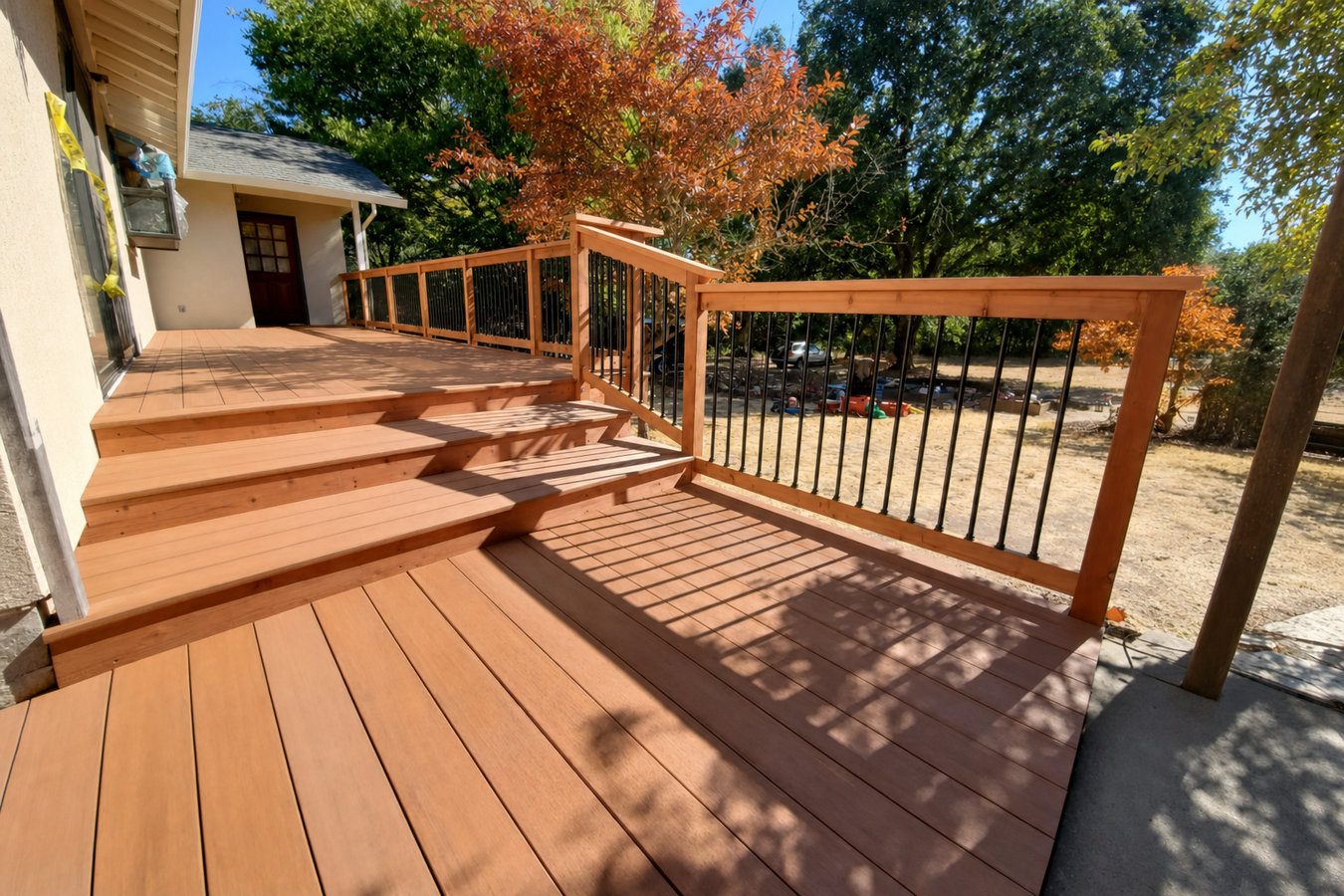
A railing that wobbles, rots, or fails a city inspection is not just an eyesore - it is a liability. We install railings that stay solid through Mankato winters and meet every code requirement.
Deck railing installation in Mankato, MN means anchoring posts to your deck's structural frame - not the surface boards - setting a code-compliant top rail height, and spacing the vertical balusters so no gap is wide enough to be a safety concern. Most single-home jobs are completed in one day.
A lot of homeowners do not think about their railing until it starts to wobble or until they are planning a renovation and notice it looks rough. A railing that moves when you push on it is not a cosmetic problem - it means the posts were not anchored correctly, or the connection has corroded and let go over years of Mankato winters. The fix is not a few extra screws. It usually means pulling the old railing out and starting over with posts bolted directly into the structural framing of the deck.
Railing work also comes up naturally alongside other projects. If you are building a new deck - including a custom deck design and build - the railing is planned and installed as part of the same project rather than added separately later. That integration tends to produce a cleaner result, since the post locations and rail runs are factored into the structural plan from the start.
Stand at the edge of your deck and push firmly on the top rail. If it moves, flexes, or feels loose at the base of any post, the railing is no longer doing its job safely. This is especially common on Mankato decks that have been through many winters - freeze-thaw cycles work fasteners loose over time, and what felt solid in September can feel shaky by the following spring.
Run your hand along the top rail and press your thumb into the posts near the base. If the wood feels spongy, crumbles slightly, or shows deep cracks, rot has set in. Mankato's wet springs and cold winters accelerate wood decay - a railing that looks okay from a distance may be structurally compromised up close, particularly on older decks that were never sealed or stained regularly.
If you can fit your fist through the spaces between the vertical balusters, the spacing is likely too wide to meet current safety requirements. This is a common issue on older Mankato decks built before current rules were in place. It is worth having a contractor take a look, especially if you have young children or grandchildren who use the deck regularly.
If a new deck project or a renovation brings your deck surface 30 inches or more above the ground, a railing becomes legally required in Mankato. Many homeowners do not realize this threshold applies to raised patios and additions, not just traditional second-story decks. If your deck height has changed or you are adding a new level, confirm whether a railing is now required before the project closes out.
Every railing installation starts the same way regardless of material: posts anchored directly to the structural frame of the deck - not the decking boards on top - and set at the correct height for your deck elevation. The American Wood Council deck construction guide and Minnesota residential building code both set specific requirements for post anchoring, railing height, and baluster spacing - and those requirements are what a city inspector will check when they sign off on the permit. We pull the City of Mankato permit before any work starts and schedule the inspection once the railing is in place. For replacement projects, we remove the old railing first and assess the condition of the existing framing before any new hardware goes in - if there is rot or damage underneath, we identify it at that stage rather than covering it up.
Material choice is the biggest decision for most homeowners. Pressure-treated wood is the most affordable option upfront but requires the most maintenance to hold up through Mankato's climate. Aluminum and composite railings cost more initially but resist the moisture absorption that causes wood to crack and rot through freeze-thaw cycles. Cable railing for decks - stainless steel cables tensioned between posts - is a popular choice for homeowners who want an open, modern look without blocking sightlines. For multi-level decks where railings run across multiple platforms and stair sections, see our multi-level decks page, which covers how railing design integrates with stair and platform framing.
The most affordable starting point - best for homeowners comfortable with regular sealing or staining to maintain performance through Minnesota winters.
A low-maintenance option that resists moisture, cracking, and fading - well suited to Mankato's climate and popular with homeowners who want the look of wood without the upkeep.
Durable, lightweight, and highly resistant to freeze-thaw cycles - a strong choice for any deck elevation and especially practical for multi-level projects where railing runs are long.
Stainless steel cables tensioned between posts - suited for homeowners who want an open, contemporary look and unobstructed sightlines from the deck to the yard.
Mankato sits in south-central Minnesota and regularly sees temperatures drop well below zero - with freeze-thaw cycles that repeat dozens of times each winter. That repeated freezing and thawing does not just affect the deck surface. It works on fasteners, post bases, and the connection points between the railing and the deck frame. A wood railing installed without proper sealant will absorb moisture every spring and compress and expand with every freeze. Over a few seasons, that movement loosens bolts and softens the wood fibers holding post bases in place. Aluminum and composite systems resist this process because they do not absorb water the same way - which is why contractors who build regularly in Mankato tend to recommend them for homeowners who do not want to seal or stain every year. The North American Deck and Railing Association provides detailed guidance on material selection for cold-climate regions, and that guidance consistently points toward low-moisture-absorption materials for climates like Mankato's.
Mankato's housing stock is also older in many neighborhoods - a lot of the decks on homes near Sibley Park and in the established residential streets south of downtown were built in the 1970s through 1990s. Railings on those decks may have been installed before current code requirements were in place, which means baluster spacing, post anchoring methods, and railing heights may not match what a city inspector would approve today. If your home is in one of these neighborhoods - or if you are in one of Mankato's neighboring communities like North Mankato or Eagle Lake - it is worth having the existing railing assessed before assuming it meets current standards.
We respond within one business day. You describe what you are looking for - new installation, replacement, or part of a larger deck project - and we schedule an on-site visit. We do not quote railing work without seeing the deck in person, because the length of the run, the condition of the framing, and the existing post situation all affect the price.
We measure the deck perimeter, check the condition of the existing framing and any posts that will carry the new railing, and walk through material options with you. A written estimate follows that covers the full scope including the permit fee - no line items that appear later.
Once you agree on scope and price, we submit the permit application to the City of Mankato's Community Development office. This step typically takes a few business days to a week. You do not need to do anything - we handle the paperwork and keep you updated on approval timing.
For most standard railings, the job is done in a single day. If old railing needs to come off first, that happens in the morning and the new system goes in the same day. You do not need to be home the entire time, but being reachable by phone is helpful in case the crew finds something unexpected in the framing.
After installation, we schedule the city inspection - you typically do not need to be present. The inspector checks railing height, post anchoring, and baluster spacing. Once it passes, we walk you through the finished work and go over any maintenance the new railing will need going into a Mankato winter.
We come out, measure the deck, check the framing, and give you a written price before any work begins. No surprises on the final invoice.
(507) 308-9721The single most common shortcut in railing installation is surface-mounting posts to the decking boards rather than bolting them through the deck frame. Surface-mounted posts look fine at first but will loosen over time - especially through Mankato's freeze-thaw cycles. We anchor every post directly to the structural frame of the deck, which is the only installation method that stays solid year after year.
On replacement projects - particularly on older Mankato homes where the deck was built 20 or 30 years ago - we inspect the existing framing before we start. If there is rot, damaged joists, or corroded hardware underneath, we identify it and discuss it with you before proceeding. Covering up structural problems with a new railing is not something we do.
We pull the City of Mankato permit for every railing project and schedule the city inspection once the work is done. That inspection is not a formality - it is a city official independently verifying that your railing meets safety standards. The City of Mankato Community Development office requires this for railing work - contractors who skip it are saving themselves paperwork at your expense.
We help you choose a material that fits both your budget and the reality of Minnesota winters - not just whatever is easiest for us to install. If you want to minimize maintenance, we will tell you honestly which options require the least upkeep in this climate. If you prefer a specific look, we will tell you what that choice means in terms of ongoing care.
A railing that passes a city inspection and stays solid through five Mankato winters is the baseline, not a premium. That is what every project we finish should look like, and it is the standard we hold every installation to.
Plan and build a new deck from the ground up - railing, framing, surface material, and permits all handled as one integrated project rather than piecemeal additions.
Learn MoreMulti-level decks require railing on every elevated platform and across every stair section - we design the railing system into the overall build rather than adding it as an afterthought.
Learn MoreSummer calendars fill fast - reach out now to lock in your preferred start date before the season is gone.